
Bitcoin Halving Explained: Why the Crypto World Can’t Stop Talking About It
If you’ve spent even five minutes in the crypto world, chances are you’ve heard people shouting about Bitcoin halving. Some call it the “biggest event in crypto.” Others compare it to a ticking time bomb for Bitcoin supply. But what does it actually mean?
Is it some secret coding trick? A market manipulation strategy? Or just another buzzword tossed around by crypto influencers?
Here’s the simple truth: Bitcoin halving is one of the most important mechanisms built into Bitcoin’s DNA. It controls supply, impacts mining rewards, and often shakes the entire cryptocurrency market.
Let’s break it all down in plain English.
What Is Bitcoin Halving?
Bitcoin halving is an event where the reward given to Bitcoin miners gets cut in half.
That’s it. Simple, right?
Miners are the people (or giant companies) using powerful computers to validate Bitcoin transactions and secure the network. As a reward for their work, they earn newly created Bitcoins.
But every four years or so, Bitcoin automatically reduces that reward by 50%.
Think of it like a gold mine suddenly producing half the gold it used to overnight. Scarcity increases, and naturally, people start paying attention.
Why Does Bitcoin Halving Happen?
Unlike traditional currencies, Bitcoin has a limited supply.
There will only ever be 21 million Bitcoins in existence. No central bank can print more. No government can magically create extra coins out of thin air.
Bitcoin halving exists to slow down the creation of new Bitcoins over time. It’s part of Bitcoin’s built-in economic system designed by Satoshi Nakamoto.
The idea is simple:
- Fewer new Bitcoins entering circulation
- Increased scarcity
- Potential increase in value over time
It’s kind of like rare sneakers or limited-edition collectibles. The harder they are to get, the more people want them.
How Does Bitcoin Halving Work?
Bitcoin halvings occur every 210,000 blocks mined on the blockchain. That usually takes around four years.
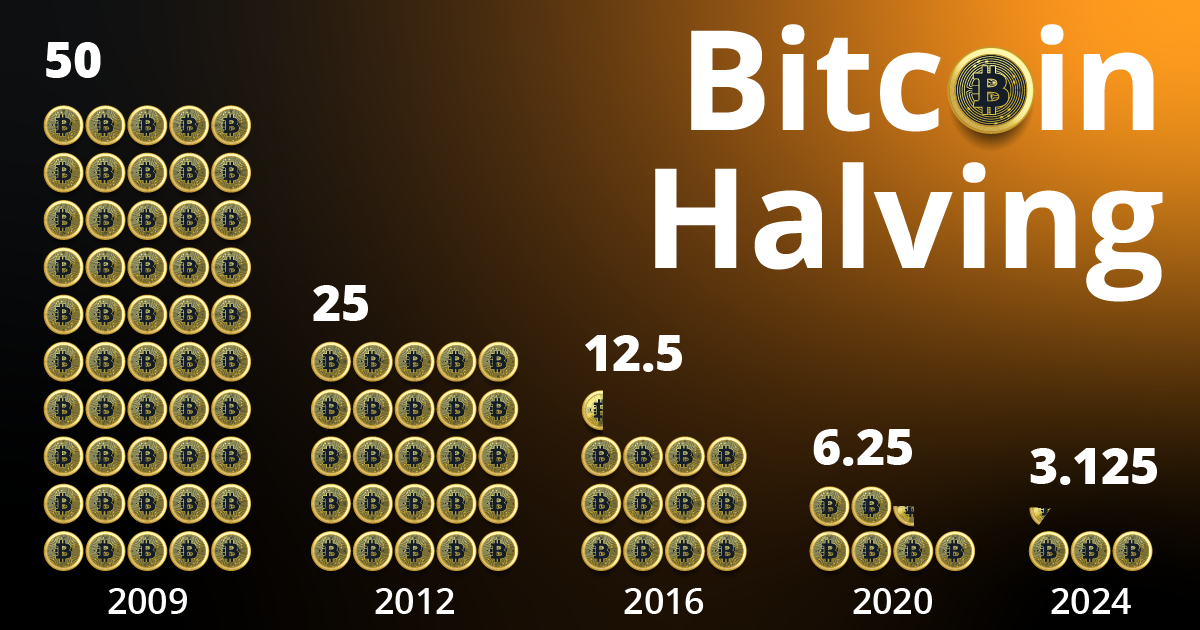
When Bitcoin first launched in 2009, miners received 50 BTC per block.
Then the halvings began:
| Year | Mining Reward |
|---|---|
| 2009 | 50 BTC |
| 2012 | 25 BTC |
| 2016 | 12.5 BTC |
| 2020 | 6.25 BTC |
| 2024 | 3.125 BTC |
Each halving reduces the flow of new Bitcoins entering the market.
Eventually, around the year 2140, all 21 million Bitcoins will be mined.
Crazy, isn’t it?
Why Is Bitcoin Halving Important?
Bitcoin halving matters because supply and demand rule everything in markets.
Imagine this:
There’s a pizza shop making 100 pizzas a day. Suddenly, the shop cuts production to 50 pizzas daily, but demand stays the same—or even grows.
What happens?
Prices usually rise.
Bitcoin works similarly. When fewer new Bitcoins are created, scarcity increases. If demand continues growing, prices often react positively.
That’s why halvings generate massive hype across the crypto community.
The Historical Impact of Bitcoin Halvings
Here’s where things get interesting.
Historically, Bitcoin’s price has surged after halving events. Not immediately every time, but often within the following months.
The 2012 Halving
After the first halving in 2012, Bitcoin went from around $12 to over $1,000 within a year.
That was the moment many people started taking Bitcoin seriously.
The 2016 Halving
The second halving reduced rewards from 25 BTC to 12.5 BTC.
What followed?
Bitcoin climbed from around $650 to nearly $20,000 in 2017.
Suddenly, everyone—from college students to Wall Street investors—wanted a piece of crypto.
The 2020 Halving
Then came the 2020 halving.
Mining rewards dropped to 6.25 BTC, and Bitcoin eventually exploded to an all-time high near $69,000 in 2021.
Of course, many factors influenced the rally, including institutional adoption and global economic uncertainty. But the halving added fuel to the fire.
Does Bitcoin Always Go Up After Halving?
Not necessarily.
This is where many beginners get confused.
Halving doesn’t magically guarantee price increases. Markets are emotional, unpredictable, and influenced by countless factors:
- Global economy
- Government regulations
- Investor sentiment
- Institutional demand
- Media coverage
Bitcoin could rise, fall, or move sideways after a halving.
Still, many investors see halvings as long-term bullish events because they reduce new supply entering the market.
How Bitcoin Halving Affects Miners
Halving can be brutal for miners.
Imagine your salary getting cut in half overnight while your electricity bill stays the same. Ouch.
That’s essentially what happens to miners.
Smaller mining operations sometimes struggle to survive after halvings because profits shrink dramatically. Efficient mining companies with cheap electricity usually have the advantage.
Over time, this creates a survival-of-the-fittest environment in the mining industry.
Bitcoin Halving and Scarcity
One of Bitcoin’s strongest selling points is scarcity.
Traditional fiat currencies can be printed endlessly. We’ve seen governments inject trillions into economies during financial crises.
Bitcoin doesn’t work like that.
Its supply schedule is transparent and predictable. Everyone knows exactly how many Bitcoins exist and when new ones will enter circulation.
That predictability is one reason people often call Bitcoin “digital gold.”
And honestly? The comparison makes sense.
Gold is valuable partly because it’s scarce and difficult to mine. Bitcoin follows a similar philosophy—but in digital form.
What Happens After All Bitcoins Are Mined?
Good question.
Once all 21 million Bitcoins are mined, miners will no longer earn block rewards.
Instead, they’ll make money from transaction fees paid by users sending Bitcoin across the network.
This system is designed to keep miners motivated to secure the blockchain even after new Bitcoin creation stops.
It’s a long-term economic plan stretching over more than a century.
Pretty wild when you think about it.
Common Myths About Bitcoin Halving
“Halving Instantly Doubles Bitcoin Price”
Nope.
Price movements take time and depend on market conditions.
“Bitcoin Becomes More Valuable Automatically”
Scarcity alone doesn’t guarantee value. Demand must also remain strong.
A rare item nobody wants still has little value.
“Mining Becomes Impossible”
Mining gets tougher financially, but it doesn’t stop. The network adjusts over time.
Should Investors Care About Bitcoin Halving?
Absolutely.
Even if you’re not a crypto trader, halvings are major events that influence the broader digital asset market.
Altcoins, mining stocks, crypto ETFs, and investor sentiment often react to Bitcoin’s movements.
Many long-term investors watch halving cycles closely when planning entry points or market strategies.
But remember: crypto remains highly volatile.
Never invest money you can’t afford to lose.
The Future of Bitcoin Halving
Bitcoin halvings will continue roughly every four years until all coins are mined.
Future halvings may still create excitement, but their impact could change as Bitcoin matures and global adoption grows.
Some analysts believe halvings will become less dramatic over time because Bitcoin markets are becoming more efficient and institutionalized.
Others think scarcity will keep pushing prices higher in the long run.
Nobody knows for sure.
And honestly, that mystery is part of what keeps Bitcoin fascinating.
Conclusion
Bitcoin halving is much more than a technical crypto event. It’s the heartbeat of Bitcoin’s economic system.
By cutting mining rewards in half every four years, Bitcoin controls inflation, increases scarcity, and reinforces its identity as a limited digital asset.
That’s why investors, miners, and crypto enthusiasts around the world pay close attention whenever a halving approaches.
Will halvings always trigger massive bull runs? Maybe. Maybe not.
But one thing is certain: Bitcoin halving remains one of the most unique and powerful ideas ever introduced in modern finance.
And in a world where money can be printed endlessly, scarcity suddenly feels pretty revolutionary.